Ms.SammyK

Learning. Growing. Educating.

Meeting The Needs of High-Need Students — September 22, 2018

Meeting The Needs of High-Need Students

In every classroom there will be a variety of students not only in the aspects of race, ethnicity, religion, gender, and socioeconomic statuses; but in the students needs and those students that are considered High-Needs (which this post will focus on). As teachers we want our students to be equipped with the tools they need to succeed. In order to do that we need to better understand how we can meet those in a student that is considered High-Need. I recently watch a video one of my College Professors made about High-Needs Student

High-Need students can fall under five different categories; Passive, Aggressive, Attention, Perfectionist, and Socially Inept. Students may fall under one category or they may draw from several different categories, it just depends on the student.

Aggressive students can be split into three different categories: Oppositional, Hostile, and Covert. Oppositional students do not like rules, and may annoy other students to get them riled up (think siblings and the “I’m not touching you” while the hold their finger way to close your face). Hostile students often don’t see the consequences of their actions, these are the student who throw things out of anger not for attention because they do not know how to control their behaviors. Covert aggression is sneaky, they may be a very pleasant student however when the authoritative power isn’t around they have kanck in starting trouble. Aggressive students may benefit from intervention programs that help them to manage anger, but also implementing behavior contracts (for all students, so no one is singled out).

Socially inept students struggle with the social constraints of life. This category is often seen in students that may have Aspergers and Autism, because understanding social cues is difficult. This can be extremely difficult when making friends because they may not understand personal space, sarcasm, or notice when others become uncomfortable. One of my college roomates has Aspergers to some degree, and usually I would have to tell her I was being sarcastic that way she wouldn’t think she did something wrong. However, she would dish it back at you in a heartbeat! Depending on the school the student can have an intervention program that teaches them about the ins and outs of social skills.

I like being honest for my readers of my posts because I think it helps to not only understand what it is I am talking about but also sharing in my experiences as an educator but also a life-long student. For anyone that has had me as a Student or just knows me as person, can accurately place me into three of the five categories; Passive, Attention-inattentive, and Perfectionist. The ironic part of those three categories is that some of them counteract each other.

A passive student can fall into two different subcategories or both depending on life experiences. Fear of relationships, depending on the student’s background there might be a history of abuse or neglect, bullying, or perhaps lack of socialization as an infant. In schools building relationships is important but it is also scary to the student who doesn’t want to be hurt again. Passive student may also fear failure, again there may be underlying trauma the student has faced to shape them into a passive student. As a Teacher you may have to be the one that develops a strong relationship with the student before they can begin to build relationships with other students, you must also take into consideration criticism it may be best to refrain from it because it maybe a trigger for the student. Reward the little things, but not to draw attention to them in a class setting.

Student that have attention problems in terms of Hyperactive and Inattentive, with both types students may need to a more structured schedule with frequent learning breaks. In my undergraduate studies we were always told instruction should only last for 20 minutes at a time, because after that all students lose focus. That doesn’t mean you stop teaching the lesson after those 20 minutes rather you can tie in a movement activity or brain break before continuing the lesson. Inattentive students are often described as unorganized, so setting the class up in a way that teaches organizational skills, as well as skills to help students remained focused.

Students that are considered perfectionists have unrealistic goals for themselves that when they aren’t met derails their whole outlook, these students may also have daily routines that need to followed or else they will have a bad day, they may also be over organized to the point where if something is missed or forgotten the student becomes a walking ball of anxiety. This mindset typically (not all the time) will produce tiny humans with low self-esteem, self worth, and the overwhelming feeling of feelings inferiority. This mindset becomes so deeply rooted into the students mind it prevents them from taking chances, making mistakes, or stepping out of their comfort zone. This mindset can become extremely difficult to manage, because its almost parasitic in how it grabs ahold of the student and just never lets go and from it a person can develop, anxiety and depression among other mental illnesses. As a teacher you may have to sit down with the student and make attainable goals, let them know that they can make mistakes and let them learn how to cope with making those mistakes.
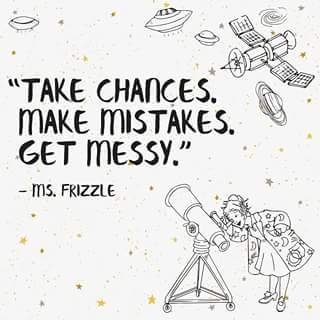
The Best Advice from one Curly haired Teacher to Another (Google Images)


       Turney, R., Dr. (n.d.). High-Need Students [Understanding HIgh-Need Students Through Five Different Categories].

 

Finding Success With Disruptive Behavior — September 13, 2018

Finding Success With Disruptive Behavior

ground group growth hands
Without continual growth and progress, such words as improvement, achievement, and success have no meaning. Benjamin Franklin
Read more at: https://www.brainyquote.com/topics/growth Photo by Pixabay on Pexels.com


No matter if you are an inspiring teacher getting ready to enter the field, a first year teacher, or a Veteran teacher with many years behind you. Some things your students may say or do will affect you in some way, and how you react to it sets the tone for the class. While, the rules that we put in place for our classroom or those put in place by the school set the precedent for the environment, its how the individual teacher reacts to those who chose to not follow the rules that sets the tone for the class.

Some of us if not all of us have been in a classroom where we witnessed a teacher yell, because they were tired of all the Disruptive Behaviour that was occurring, and they just had enough. Then after the initial shock from the class it just continues because the class now knows the Teacher’s limit on what they can get away with. Children are crafty, because when they are told they can’t do something they will find a way to do it.

When it comes to finding success in disruptive behavior, teachers need to be held accountable for how they react. If a student is being disruptive or is off task while you are teaching, and you stop teaching the class to correct the behavior, all other students are missing out on the opportunity to learn, not only that but it not only puts your attention to that student but also every student turns to see what they are doing. That reaction only reinforces the disruptive behavior. Instead of calling the student out you can talk to the student during a time of transition, or walk over to them without saying anything and just stand there and continue teaching.

Another important detail with accountability is knowing what you need to be held accountable for. A great way to ensure that you are being held accountable (and your students) is the creation of an accountability agreement that both you and your students create. Much like the creation of a class mission statement it gets both parties are involved in what it contains. However, with the accountability agreement you can see what the students expect from you, and what they want you to be held accountable for. The accountability agreement should be done twice a year once at the beginning and then after Winter Break, because students may move away or move into the class this way everyone can be included and you can revisit things that worked well or things that didn’t.

Taking ownership of your behaviors and reactions, allows you to grow as a person and that is what finding the success in disruptive behavior truly is. The behavior becomes something you can learn from, and with learning comes growth.

You Know How You Learn — September 6, 2018

You Know How You Learn

By the time our students reach third grade they have started to figure out some ways that works best for how they learn. Everyone learns differently. Some students work best in groups, and in pairs, and others know that they learn best alone, some like music while they work, others like silence. I could go on, but I think by now you the reader gets the gist of things. Learning is fun, but when a student is placed in a learning environment because they aren’t given a choice learning becomes difficult. As a teacher you will sometimes have to force students out of their “learning zone” that way they can experience new ways of learning, and learning how to manage ourselves in times where we are out of out zone because as they grow older these are just skills they need to have.

In this Ted Talk he talks about how he literally jumped out of the window to avoid reading out loud. In his talk he mentions it wasn’t until he graduated High School and joined the Military that he found out he wasn’t dumb because all of his educational career at that point in time was out of his learning style and made him feel dumb.

I think the best thing we can do as teachers when it comes to learning is not only teaching using different learning styles, but giving the student the chance and the choices to explore their learning.  One of the most heartbreaking moments I have faced as an observer in a class was during a reading time where students were reading out loud to themselves with PVC “phones” to work on fluency, I was walking around and he was off in a secluded corner and as he was reading (His back was turned to me), he whispered into the phone “I wish I could read”. Now, the student could read, but Like DJ Cunningham this student had a learning disability. It’s not that this student couldn’t read, it is just reading for him was hard.

I wish that student had to choice of how to work on fluency, because if given the choice to read alone with  a PVC phone or read together with another student. He would have chosen to read with another student, because he knew having someone there to encourage him to keep going would benefit him much better than getting frustrated with himself by reading alone.

Give the Students choice in their learning, and watch their love of learning grow.  

There’s a Leader in Me — August 30, 2018

There’s a Leader in Me

My corny title has a purpose, but it must continue for a little bit. There is a leader in all of us, even that shy kid that sits alone in the library that you know their first name and that is all you know. I promise you, there is leader in all of us it may be hiding but it’s there.

Growing up I wasn’t the best student speaking both academically and behavior wise, but I also wasn’t that student that had to be called into the principal’s office, or had my clip put down, lost a letter in my name when I misbehaved, or whatever a school may use as a consequence due to not turning in work or causing an issue. I worked hard, and did the best I could; but my best wasn’t the best in the class. When the different behavior programs started to evolve and make their way into the schools that I was in, I noticed a shift in my effort. It seemed no matter how hard I worked or how I behaved my efforts went unnoticed, but those who were labeled “gifted” or “problem” reaped the most out of the programs. Those that fell between gifted and problem student were on the outside looking in. I spent most of my life in that mindset and continue to live in that mindset as an adult, because of my experiences in life and the various challenges or proverbial mountains that I had to climb to get where I am today, some of which I am still climbing but at least I’m climbing.

I am huge fan of the program Leader in Me, which is loosely based or influenced by Stephen Covey’s 7 Habits of a Highly Effective Person. I personally have not seen this program in Action, but there is something that I take away from it because every student needs someone in their life that believes in not only them, but their individual abilities. The Leader in Me program gives everyone an equal chance, as whole no one student is better than the other, because each of them is capable. Everyone has the potential to be great, but you have to give them that opportunity.

Second Semester freshman year High School, I had a teacher go through the Roll Call list read my last name and ask my if I was related to a former student of hers. I responded Yes, to which then she responded “Are you going to do your work?”, the teacher didn’t give me the opportunity to succeed in her class, she saw my name then assumed that because my older sibling didn’t put forth effort in her class that I was going to do the same. In all honesty, I didn’t try in her class because why put effort into someone who didn’t even try to put effort into me.

The Leader in Me website, talks about changing the Mindset by using their paradigm system. Which instead of saying a small group is gifted and labeling them as such “Everyone has Genius”, each student has what they are best in. Even the confines of the word Genius can be broken up by simply saying “You are great in this one area, the others just need work”, that way negative language is not apart of that statement. You can always improve even if you are MENSA Genius, something can always be improved. Another aspect of the paradigm was changing the mindset that “Leadership is just for a few” to “Everyone can be a leader”. However, I would like to take that further and say Everyone is a leader. No matter who the person is, they have the potential to be a leader, they are CAPABLE of being a leader if an only if they are in an environment that gives that oppertunitity.

Leadership is not about a title or a designation. It’s about impact, influence and inspiration. Impact involves getting results, influence is about spreading the passion you have for your work, and you have to inspire teammates and customers. Robin S. Sharma 


Understanding Behavior —

Understanding Behavior

No matter the School  District, the social class of the area, or the home life your students have; we are a product of our environment. I included myself in that statement because I think sometimes media forgets that Teachers are people too. School is this magical place that when students enter the building they decide who they are going to be, maybe they live a very strict lifestyle at home but when they enter the school building and sit in their desk they relax because their parents aren’t there to “order them around”, or you may have a student that is child number 4 out of 10, where often times at home they are spoken over to the point where at home the student just stops talking, but in school they are the first to answer a question because they know their voice will be heard. With whatever new-found freedom those students chose to embrace, there are those to behave for extrinsic reasons, maybe they aren’t noticed at home and just want someone to acknowledge what they are doing just for the sake of being noticed, and those who behave for a more intrinsic reason thinking that this behavior will help them gain relationships that they may think they can’t get without acting this way.

Currently I am reading a book by Geoff Colvin, and in the very first chapter he discusses what he believes to be The Seven Key Principles for dealing with behavior. My mind often tries to connect my life experiences to what I read or learn to help me better understand what is being said. The first principle Colvin talks about is Correction Procedures, which boils down to: shifting focus from the “problem behavior” (the books words) to what is considered the “appropriate” behavior or “desired behavior” for the task at hand. In trying to think of an example that would best show this principle in action. I immediately thought of Airplane Johnny. Airplane Johnny wasn’t his actual name, but I grew up with him he sat by me in most of my classes through elementary school. He adored airplanes, he drew them, read about them, made paper airplanes, he lived and breathed Airplanes. Johnny would get so frustrated in class because he had a hard time with comprehending information, so when he would get “worked up” he would get up from his desk, move to the back of room and pretend to be an airplane, arms rotating, making engine noises, the whole shebang.

As a teacher you have to think about how to handle this, you have a class of 26 and one of those is running back and forth pretending to be Crop-duster in the back of your class. No teacher had succeed in drawing our attention away from Johnny like our Third grade teacher, she not only shifted our focus from Johnny but reinforced what we needed to be doing by saying “I like the way Sarah has her Math book out, her pencil is in her hand and she is ready to learn”. That way it not only reminded her students what behavior was appropriate but also drawing the attention away from Airplane Johnny and reminding him of where he is and where he needs to be without directly saying “That is not appropriate” or stop. In the end it all worked out, because Airplane Johnny is now an engineer for you guessed it Airplanes!

“Adventure is worthwhile in itself” Amelia Earhart


The Journey Begins — August 23, 2018
Create your own website, free on WordPress.com.Create your own website.
Start free